CASA training is where future Advocates begin building the knowledge and skills they need to speak up for children involved in the child welfare system. At Henrico CASA, training is more than learning information—it’s an opportunity to ask questions, work through real-world scenarios, learn from different perspectives, and begin preparing for the realities of advocacy.
Learning the Bigger Picture
Before an Advocate can speak up for a child, it’s important to understand the systems surrounding that child.
Throughout training, future Advocates learn about the child welfare and court systems and the many people who may be involved in a case. They explore how decisions are made, how different professionals work together, and where a CASA Advocate fits into that process.
Understanding that bigger picture helps Advocates recognize how their role can make a difference. Learn more about becoming a Henrico CASA Advocate and what the role involves.
Putting Learning Into Practice
CASA training isn’t just about learning terms, policies, or procedures. Future Advocates also have the opportunity to practice applying what they’re learning.
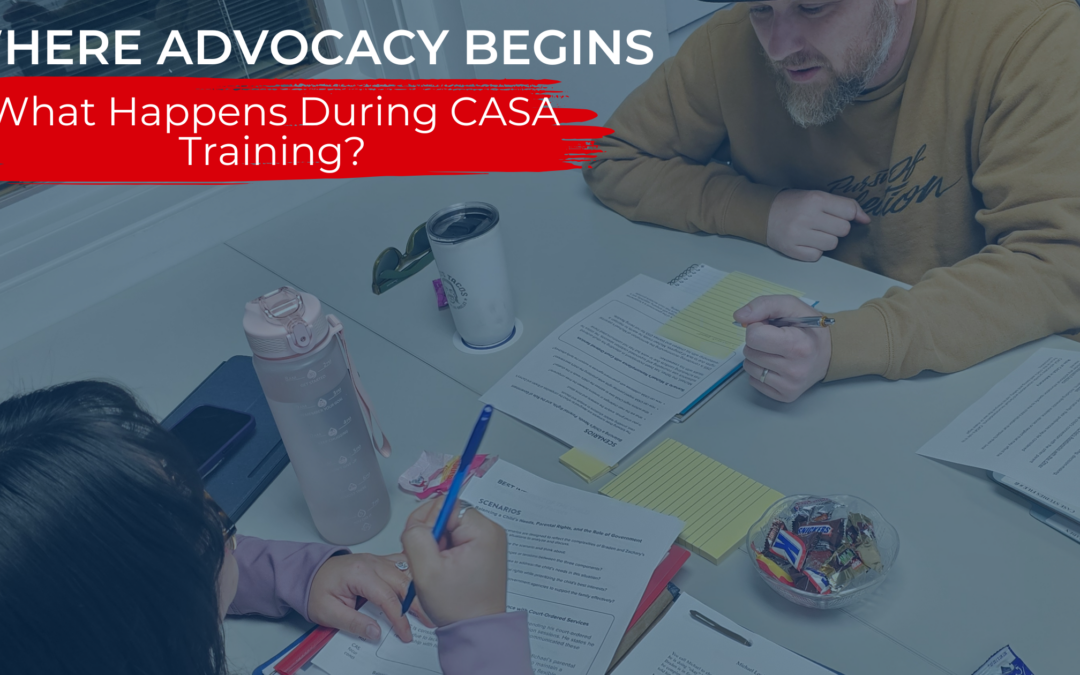
As part of the training experience, the class walks through a case study or mock case together. By working through a scenario from beginning to end, future Advocates can begin to see how the different pieces of a case come together.
They may consider what questions they would ask, what information they would want to gather, who they would need to communicate with, and how they would approach different situations as the Advocate.
Working through a practice case gives future Advocates a chance to think through their role in a setting where they can ask questions, learn from one another, and work through situations before encountering them in an actual case.
One of the most valuable parts of CASA training is hearing about people with different experiences and areas of expertise.
Future Advocates learn more about the experiences children and families may have within the child welfare system, while also gaining insight into the roles of the professionals who work with them.
These different perspectives help Advocates understand that every case is more than what appears on paper. There are relationships, challenges, strengths, and individual circumstances that all shape a child’s experience.
Asking Questions Along the Way
There is a lot to learn during CASA training, and questions are encouraged.
Future Advocates may wonder how to approach a difficult conversation, what to do when they have a concern, or how to navigate a situation they’ve never encountered before.
Training provides a space to work through those questions and learn from others who are on the same journey.
And while training provides an important foundation, Advocates aren’t expected to know everything when they finish. Henrico CASA staff continue to support Advocates throughout their service, helping them navigate new situations as they arise.
Preparing for What’s Next
By the end of CASA training, new Advocates have gained knowledge about the systems they’ll work within and begun developing the skills they’ll use in their role.
But perhaps just as importantly, they’ve started to think about what it means to advocate for a child.
Training is where the journey begins. The next step is taking what they’ve learned and bringing it into the real world—getting to know a child, listening to their experiences, asking questions, and becoming a consistent voice on their behalf.
For our newest class, that next chapter is just around the corner!