From Henrico CASA:
At Henrico CASA, we are always looking for ways to highlight tools and resources that strengthen and support our Advocates in their work. Continuing education is a vital part of effective advocacy, and CASA College is one of the most valuable statewide resources available to help Advocates grow their knowledge and confidence.
CASA College is Virginia CASA’s statewide training hub, designed to help Advocates feel knowledgeable, prepared, and confident when speaking on behalf of the best interests of the children they serve. Through virtual training courses led by subject matter experts, CASA College provides opportunities to deepen advocacy skills, strengthen understanding, and stay informed on topics impacting children and families.
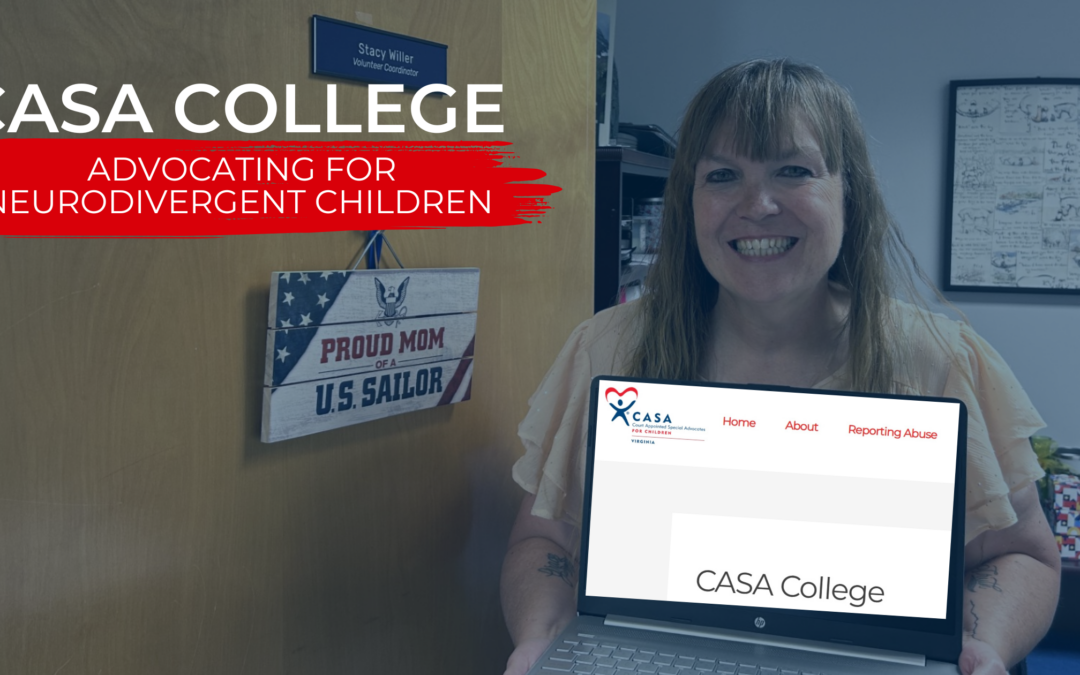
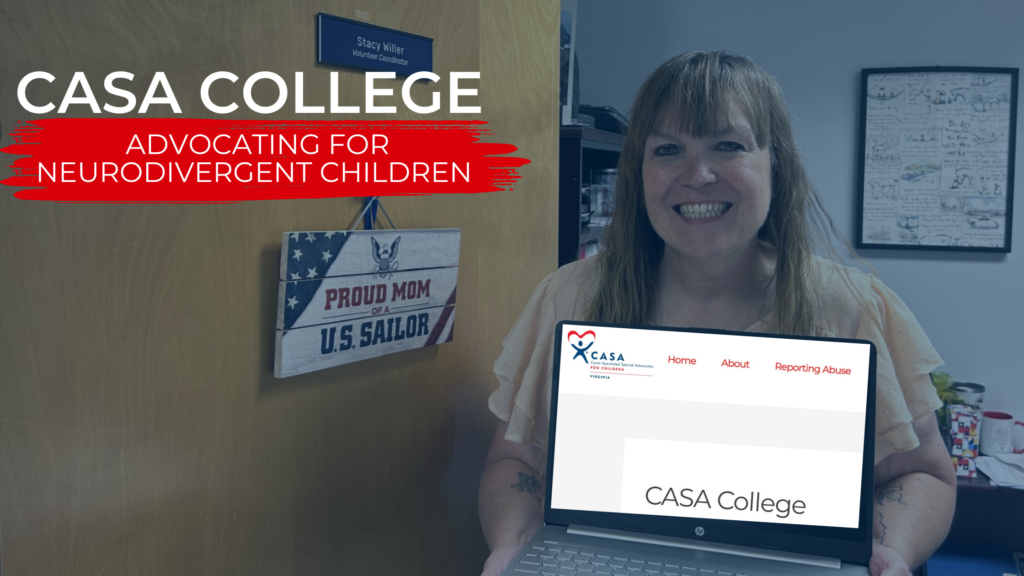
This week, Volunteer Coordinator, Stacy Willer shares reflections on Advocating for Neurodivergent Children and the importance of understanding each child’s unique strengths, needs, and experiences.
Neurodivergent is a nonmedical term that describes people whose brains work differently from what society considers typical. Neurodivergence includes Autism Spectrum Disorder (ASD), attention-deficit/hyperactivity disorder (ADHD), learning disabilities such as dyslexia, and sensory processing differences.
A diagnosis does not define a child. Every child has unique strengths, abilities, communication styles, and support needs.
During the training, participants learned that about 1 in 6 children ages 3–17 has a developmental disability. Because these disabilities can affect a child’s experience in the court system, CASA Advocates benefit from understanding neurodivergence. This knowledge helps them identify needed accommodations, connect children with services, and make sure each child’s voice is heard.
Looking Beyond the Diagnosis
This training was meaningful to me both professionally and personally. As the grandparent of a child with Level 3 Autism, I understand the importance of learning how to support and advocate for neurodivergent children.
My granddaughter is nonverbal and has significant support needs. She is also the sweetest, smartest, happiest, and most loving child. Learning about autism has been important, but learning about her has mattered even more. I have learned how to speak for her when she cannot speak for herself.
She is fortunate to have family members who advocate for her every day. My heart breaks for children who feel overlooked or forgotten because they are different. Thankfully, CASA Advocates often become the caring voice those children need.
Common Needs of Neurodivergent Children
Children with autism may experience challenges that affect communication, relationships, education, and daily life. Common characteristics can include:
- Developmental delays
- Communication challenges
- Difficulty with social interaction
- Strong interests in specific topics or activities
- Difficulty understanding emotions
- Sensory sensitivities to light, sound, touch, taste, or pain
- Repetitive movements or behaviors
- Difficulty with transitions
- Sleep challenges
- Difficulty with impulse control
Every child is different. Not every child with autism experiences these characteristics, and the level of support each child needs varies.
Understanding a child’s individual strengths and challenges allows CASA Advocates to better support them at school, in therapy, and in court.
CASA Advocates often spend more time with a child than many other professionals. That time allows Advocates to build trust and better understand the child’s needs, preferences, and strengths. Building these relationships may take patience and flexibility, but consistent visits make a lasting difference.
Why Advocacy Is So Important
Many disabilities are invisible. Because of this, people may overlook or misunderstand a child’s needs. Without the right support, children can face delays in receiving important services or accommodations.
Children with disabilities also face a higher risk of abuse and neglect. They may depend more heavily on caregivers, experience communication barriers, or struggle to recognize or report unsafe situations.
Even after entering the court system, many children still find it difficult to speak up for themselves. That is why CASA Advocates play such an important role.
Advocates help make sure a child’s voice is not lost. They help judges, teachers, therapists, and other professionals understand who the child is, what they need, and how to help them feel safe and supported.
Best Practices for CASA Advocates
The training shared several practical ways Advocates can better support neurodivergent children:
- Build relationships with professionals who specialize in supporting children with disabilities.
- Learn about community resources that provide additional support.
- Stay informed about laws that affect children with disabilities and child welfare.
- Focus on each child’s strengths rather than only their challenges.
Communication also plays a key role in advocacy. Speak directly to children just as you would any other child while respecting their individual communication needs. Use clear, concrete language, avoid confusing expressions, and check for understanding.
The training also emphasized the importance of person-centered language. Children are children first. A diagnosis should never define who they are.
Every Child Deserves an Advocate
This training reminds us that every child deserves someone who believes in them, supports them, and stands beside them.
Being assigned to a case involving a neurodivergent child may feel intimidating at first. However, the heart of advocacy never changes. Get to know the child. Learn about their individual needs. Make sure their voice is heard.
Every child deserves to be seen for who they are, not simply for the challenges they face. As CASA Advocates, we have the privilege of standing in the gap for children and helping them receive the support, understanding, and care they deserve.