From Henrico CASA:
At Henrico CASA, we are always looking for ways to highlight tools and resources that strengthen and support our Advocates in their work. Continuing education is a vital part of effective advocacy, and CASA College is one of the most valuable statewide resources available to help Advocates grow their knowledge and confidence. CASA College is Virginia CASA’s statewide training hub, designed to help Advocates feel knowledgeable, prepared, and confident when speaking on behalf of the best interests of the children they serve.
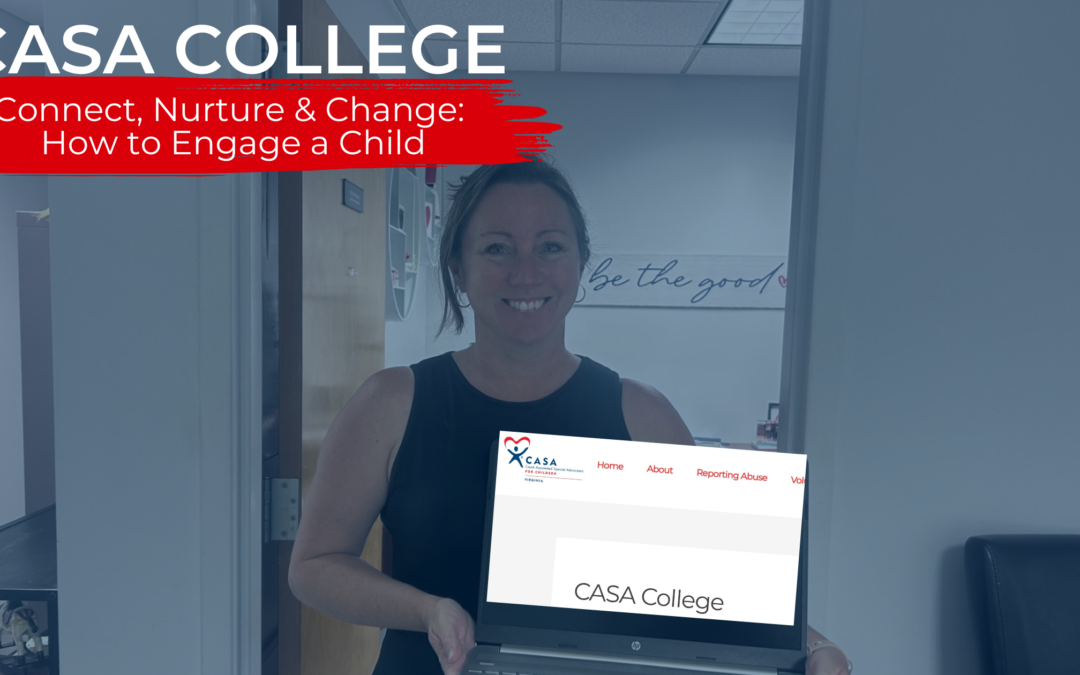
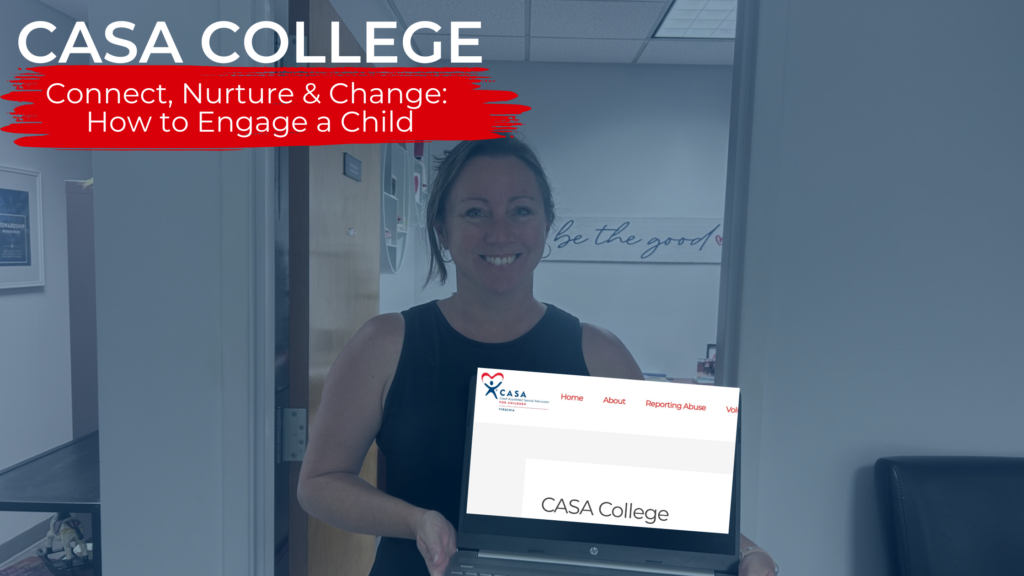
Through virtual training courses led by subject matter experts, CASA College provides opportunities to deepen advocacy skills, strengthen understanding, and stay informed on topics impacting children and families. This week, our Director of Partnerships, Kristin recaps Connect, Nurture & Change: How to Engage a Child.
Children who are referred to Henrico CASA’s program for court advocacy have experienced trauma. Sometimes it is one significant event. Sometimes it is years of instability, neglect, or abuse. Either way, those experiences can change the way a child sees the world.
All of us at Henrico CASA want to help these children. Our hearts break when we think about the types of things they have experienced. We want to show up for them. We want to convey that we value them and want the best for them. We see ourselves as safe, trustworthy, caring adults…
But these children often don’t see us in the same way. A new adult entering their life may not automatically feel like a safe adult. In fact, a child who has previously been hurt by adults may be quietly wondering:
Are you a good person?
Are you safe?
Are you going to leave?
Can I trust you?
Those are pretty reasonable questions when you think about what some of the children we serve have experienced.
A child can be physically safe. They can be living in a safe home, surrounded by safe people, with no immediate threat of harm — and still not feel safe.
Being safe and feeling safe are two very different things. Feeling safe takes time. There is no timeline for feeling safe and there is no magic number of visits when a child suddenly decides, “Okay, I trust this person now.”
I know this personally. The children who joined by family through adoption have been in a safe, stable home for more than eight years. However, they still default to distrust. Their early experiences shaped the way their brains learned to understand relationships and the world around them. Changing that takes patience, consistency, and time.
That is why I found this CASA College session so meaningful.
Connecting with a child isn’t about getting them to open up. It’s about creating the environment and conditions where they eventually want to share. For our CASA Advocates, that might mean playing a game, talking about a shared interest, asking about school, listening carefully to a child’s answer… and then remembering it the next time they visit.
It means being genuinely interested in their thoughts, their interests, and their world. And more than anything, it means being consistent.
Consistent in word.
Consistent in mood.
Consistent in deed.
For a child who has experienced adults who were unpredictable, unreliable or unsafe, an Advocate who simply keeps showing up can be incredibly powerful.
I don’t think there is a single CASA case that isn’t connected to the lessons in this session. Every child we serve has experienced some level of trauma. Every child has had their sense of safety disrupted in some way. And every child is being asked to navigate relationships with new adults while carrying experiences that most of us cannot fully understand.
Our Advocates are trained to understand that trust may not come quickly. They don’t take a child’s quietness, hesitation or disengagement personally. Instead, they keep showing up. They keep listening. They keep looking for ways to connect.
And sometimes, we see the progress.
A child who once wouldn’t talk begins sharing a little more.
A child who wouldn’t make eye contact starts smiling when their Advocate arrives.
A child who didn’t want to play eventually asks, “Are we going to play that game again?”
And sometimes, we may not see much progress at all during the life of a case. But that doesn’t mean the work isn’t making a difference. Because showing up is the work.
Every consistent visit gives a child another experience with an adult who says what they mean, does what they say they will do, listens to them and comes back again.
Maybe the child doesn’t trust them yet.
Maybe they never fully get there while the case is open.
But somewhere along the way, that child is learning something important:
Not every adult leaves.
Not every adult disappoints me.
Some adults keep showing up.
And that, to me, is the heart of Connect, Nurture & Change.
We may not always be able to measure felt safety. We may not see the change happen in front of us. But every time a CASA Advocate shows up for a child, they are helping create one more experience of consistency, connection and trust.
And for a child who has experienced trauma, that can be the beginning of a new way of seeing relationships and seeing the world.